
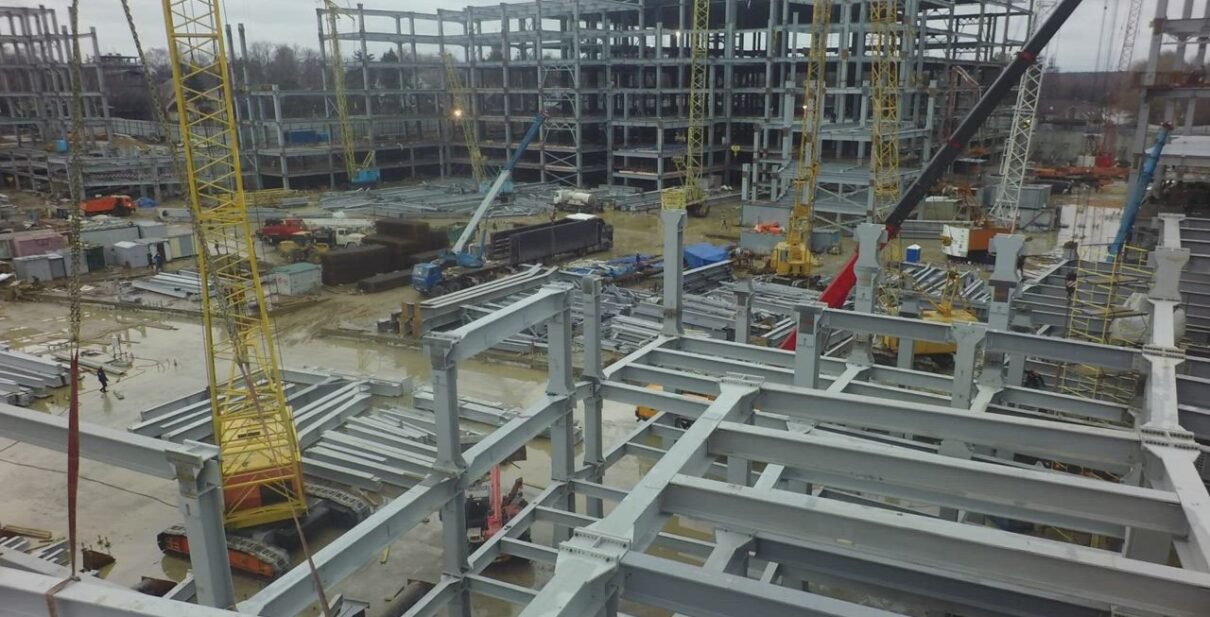
Industrial facilities rely on heavy machinery to operate efficiently and produce consistent results. From manufacturing plants and power generation sites to processing facilities and refineries, the performance of industrial equipment directly impacts productivity, product quality, and overall operational success. However, even the most advanced machinery cannot perform optimally without a solid, well-engineered foundation.
1. Supporting Heavy Loads and Distributing Weight Effectively
Industrial machinery such as turbines, compressors, pumps, presses, and generators can weigh thousands of kilograms and exert tremendous forces during operation. A machine foundation’s primary function is to support these loads and distribute the weight evenly across the underlying soil or structural base. Without adequate load distribution, the foundation can settle unevenly, causing the machine to tilt, shift, or become misaligned.
Quality machine foundations are designed using detailed engineering calculations that account for the equipment’s weight, operating loads, and dynamic forces. Engineers analyze soil conditions, perform geotechnical testing, and determine the appropriate foundation dimensions, reinforcement requirements, and material specifications.
2. Minimizing Vibrations and Protecting Equipment Performance
Most industrial machinery operates at high speeds and generates significant vibrations. Without proper vibration control, these oscillations can damage both the equipment and the surrounding structure. Excessive vibrations lead to premature wear on machine components, reduced operational efficiency, increased maintenance costs, and potential safety hazards.
Quality machine foundations are engineered to absorb and dampen vibrations, preventing them from transferring to adjacent structures or equipment. This is achieved through proper foundation mass, strategic reinforcement, vibration isolation systems, and the use of specialized materials such as elastomeric pads or spring mounts.
3. Ensuring Precise Alignment and Operational Accuracy
Industrial machinery operates within tight tolerances, and even slight misalignment can result in operational problems. Misaligned equipment may produce poor-quality output, consume more energy, generate excessive noise, or suffer accelerated component failure. In some cases, misalignment can even pose safety risks.
A quality machine foundation provides a stable, level platform that maintains precise alignment throughout the equipment’s operational life. During installation, anchor bolts are positioned accurately, and grouting is applied to secure the machine firmly in place. Professional contractors use laser alignment tools and precision measuring instruments to ensure that every dimension meets engineering specifications.
4. Increasing Equipment Lifespan and Reducing Maintenance Costs
Investing in a high-quality machine foundation pays off in the long run by extending equipment lifespan and reducing maintenance expenses. When machinery operates on a stable, well-designed foundation, it experiences less stress, fewer vibrations, and minimal misalignment issues. This translates to lower wear and tear, fewer repairs, and less frequent component replacements.
Conversely, a poorly constructed foundation forces equipment to operate under suboptimal conditions. Excessive vibrations can loosen bolts, damage bearings, crack casings, and cause fatigue in structural components. Misalignment increases friction, reduces efficiency, and accelerates wear.
5. Complying with Engineering Standards and Safety Regulations
Industrial machine foundations must comply with national and international engineering standards such as ACI (American Concrete Institute) guidelines, ISO standards, and local building codes. These standards define design criteria, material specifications, construction practices, and testing procedures to ensure structural integrity and safety.
Professional contractors with expertise in industrial construction understand these requirements and ensure full compliance throughout the project. They conduct soil testing, perform structural analysis, prepare detailed engineering drawings, and coordinate inspections with regulatory authorities.
6. Adapting to Site Conditions and Operational Requirements
Every industrial site presents unique challenges — whether it’s poor soil conditions, limited space, proximity to existing structures, or the need to accommodate future expansions. Quality machine foundation construction involves careful planning and customization to address these factors.
Experienced contractors conduct thorough site assessments before designing foundations. They evaluate soil bearing capacity, groundwater levels, seismic risks, and environmental conditions. Based on this analysis, they recommend the most suitable foundation type — whether it’s a shallow foundation, deep pile foundation, mat foundation, or isolated pedestal foundation.
Conclusion
Quality machine foundations are the unsung heroes of industrial facilities. They provide the stability, vibration control, and precision alignment that machinery needs to perform reliably and efficiently. Investing in professional foundation design and construction protects your equipment, reduces maintenance costs, ensures compliance with safety standards, and supports long-term operational success.
At Bushra Global Company, we specialize in designing and constructing high-quality machine foundations for industrial facilities across Saudi Arabia. Our team of experienced engineers and skilled construction professionals delivers solutions that meet the highest standards of quality, safety, and performance. If you’re planning an industrial project or need expert foundation services, contact us today to discuss your requirements.